

Homogenizer
Pharmaceutical homogenizers are used to unify formulations, reduce particle/droplet size, form and stabilize emulsions/suspensions, and — in some technologies — perform cell disruption and nanoemulsion production. The exact original handwritten subtype is not yet confirmed internally; the technical segmentation below is a proposed website architecture, adjustable once Daroogan confirms.
Subcategories
High-Shear / Rotor–Stator
Rotor–stator technology relies on intense shear between a high-speed rotor and a fixed stator, and is common for dispersing, homogenizing, and emulsifying in lab and formulation-development settings. IKA ULTRA-TURRAX is the reference family here (T 10 at roughly 0.5–100 mL up to T 65 at up to 50L capacity, speeds up to around 30,000 rpm).
High-Pressure Homogenizer
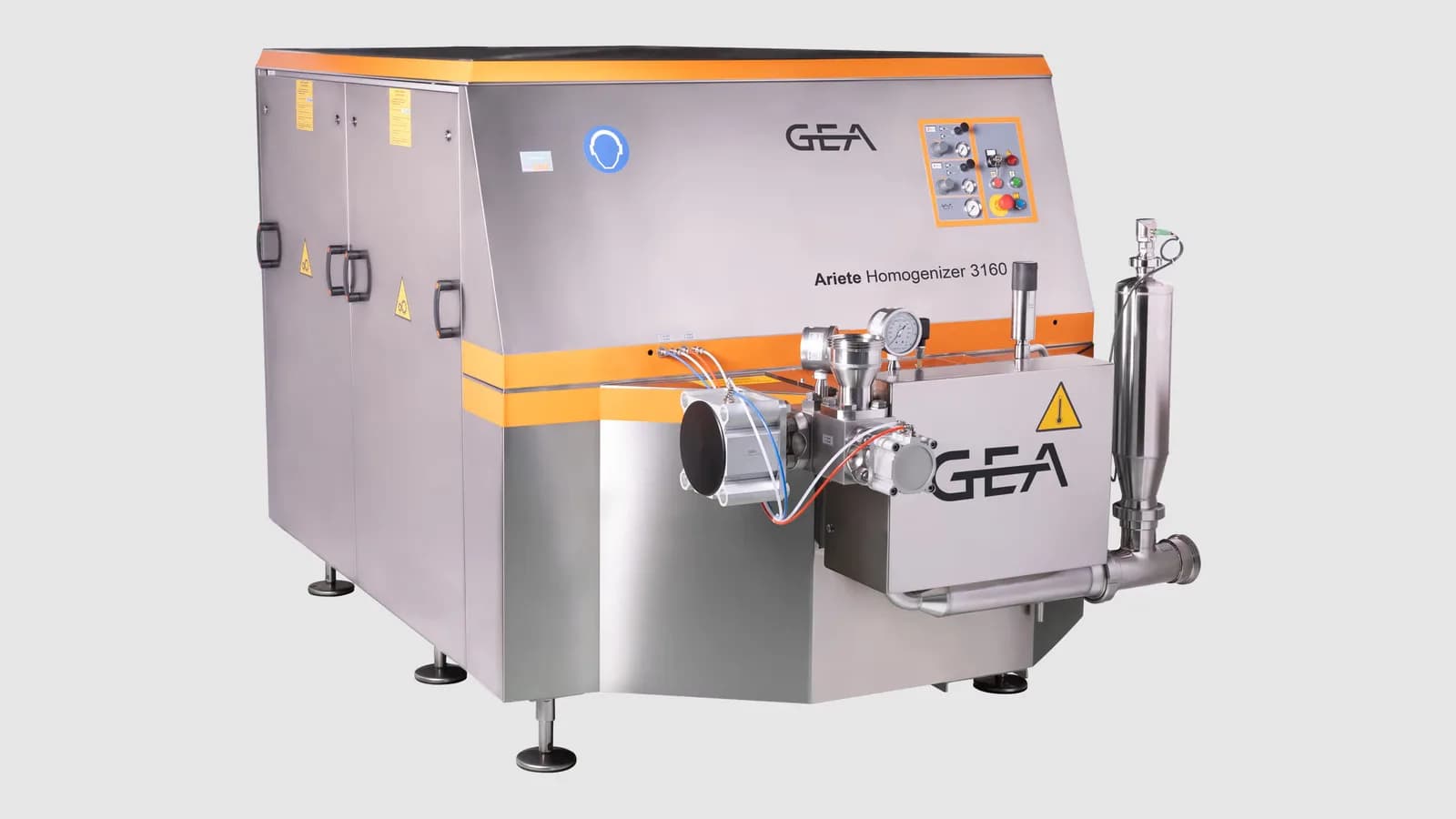
This technology processes fluid at controlled pressure through a high-pressure pump and homogenizing valve, suited to particle-size reduction, cell rupture, and advanced pharma/biotech processes. GEA covers this range from lab scale (XStream Lab) to pilot (Pony 2006 up to 1500 bar / 35–80 L/h, Panther 3006 up to 1500 bar / 50–120 L/h) to industrial (Ariete Series, including the Ariete 3160 up to 1500 bar).
Ultrasonic Homogenizer
This group uses probe ultrasonication for sample preparation, particle-size reduction, extraction, and emulsification. Hielscher offers the UP100H, UP200St, and UP400St lab models as reference instruments in this technology.
Applications
- Liquid and semi-solid formulations
- Emulsions and suspensions
- Liposomes and nanoemulsions
- Cell disruption in high-pressure technology
- Process transfer from lab to production
Selection Criteria
- Formulation type, phases, and viscosity
- Target particle/droplet size
- Flow rate and batch size
- Required pressure or shear
- Scale-up capability from lab to pilot/production
- CIP/SIP capability in the required configuration