

Viscometer
Pharmaceutical viscometers measure and control the viscosity of liquids, semi-solids, solutions, suspensions, gels, creams, and ointments in R&D, QC, and pharmaceutical production. The result depends on geometry, spindle, speed, temperature, and test method — comparing a viscosity number without the method can be misleading.
Subcategories
Rotational Viscometer
The primary choice for QC and liquid-to-semisolid formulations. The Anton Paar ViscoQC 100 (single-point, 0.1–200 rpm, ±1% accuracy) and ViscoQC 300 (multi-point, 0.01–250 rpm, 7-inch touchscreen) are the two current reference models. Older but still valid AMETEK Brookfield generations (such as the DV2Plus) also remain valuable in Iran due to installed base and user familiarity.
Cone / Plate Viscometer
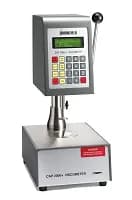
Suited to small sample volumes and tighter shear/temperature control. The AMETEK Brookfield CAP2000 (5–1000 rpm, built-in temperature control, L-series to 75°C and H-series to 235°C) and Anton Paar cone-plate accessories (such as the PTD 100, 0–100°C, ~0.5–2 mL sample volume) are the reference instruments in this group.
Rheometer-Class / Advanced Rotational
Appropriate when, beyond viscosity, shear-dependent behavior, yield behavior, or advanced measurement programs are needed. The AMETEK Brookfield DVNext Rheometer and DVNext Cone/Plate Rheometer are current models in this class.
Applications
- Syrups and oral liquid formulations
- Suspensions and emulsions
- Creams, gels, and ointments
- Batch-to-batch QC
Selection Criteria
- Sample type and formulation state
- Approximate viscosity range
- Newtonian vs. shear-dependent behavior
- Required sample volume
- Test temperature and temperature-control need
- Single-point vs. multi-point method need